


There’s a running joke as old as time, often passed off as “fact” (especially on family WhatsApp groups), that women speak more than men. Well, not true. (I even found studies debunking this myth)
On-screen though, IRL stereotypes notwithstanding, women speak significantly less than men. And when they do speak, it is usually about a man.
Don’t believe me?
In 1985, cartoonist and graphic novelist Alison Bechdel’s long-running comic strip, ‘Dykes to watch out for’, featured The Rule in which two women discuss going to the movies. One tells the other that she only watched a movie if it had (1) at least two women and (2) they had to talk to each other about (3) something other than a man.
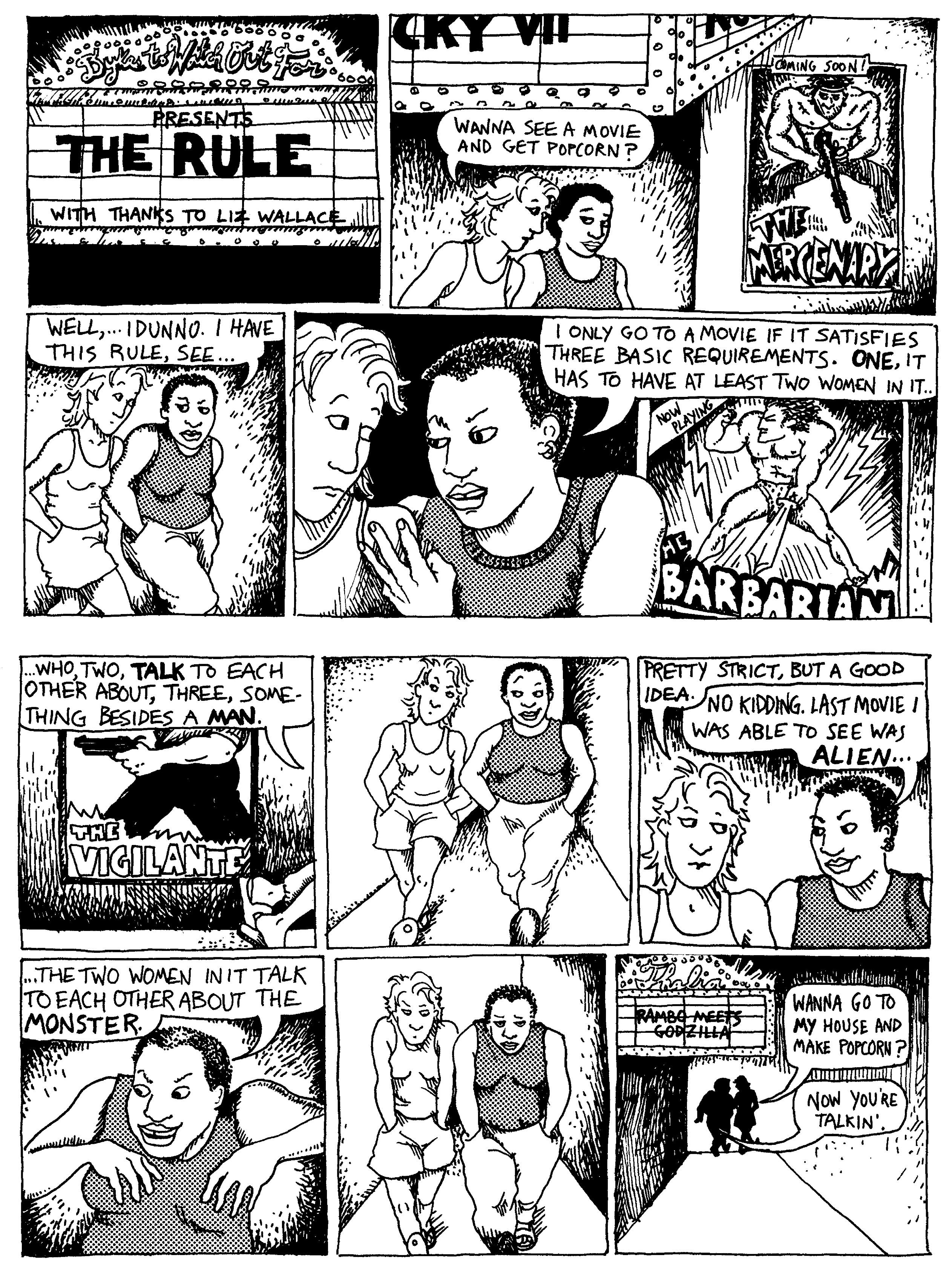
Though meant to be a jibe at the lack of female representation in fiction, it captured public attention. As a result, the Bechdel-Wallace Test came into being and soon grew into a meter of gender equality in cinema.
The test is immensely popular because it’s simple. It sets a stupidly low bar, yet many films fail miserably. Yes, just passing the test doesn’t make a film feminist, nor is it a measure of how good or bad the movie is, but it begs the question, why do so many movies fail it? A 2018 BBC study found that only half the films named Best Picture at the Oscars managed to pass the Bechdel Test.
The Bechdel test has done a great job making moviegoers more conscious about the content we consume. Perhaps that’s why there are potential successors in the works.
Yours,
Nikita